

No one knows what happens you open a book. Where you go. Where you are. How you’re changed.
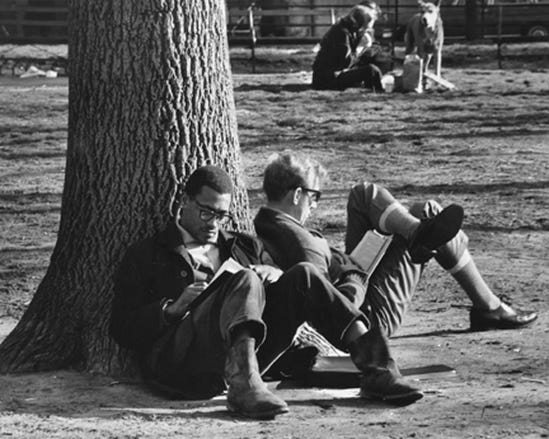
You open a novel’s front door – the size of exactly you – go into it alone, and when you come out of it, you close the door – the size of exactly you – behind you.
What happens inside stays inside.
You might give someone a story’s broad brushstrokes. Or insist they read a certain book. Or comment that this author’s latest book is a lot like that other author’s book from 18 years ago.
But what goes on when you are inside the book is a ribbon of events too intimate, too transformative and too complex for language that won’t diminish or trivialise it.
Reading is exquisitely private.
I speak and write about books all day every day, because books and words and writing are the work I do, and when the working day is done, and the chores and errands are done, I turn to my book like a teenager sneaking out of window at night to party.
In the past week, I’ve had meetings with three different people who have lived big lives, full of incidents and undertakings. One of the lives can even be said to have been full of derring-do and misadventure.
On the surface, my life seems so vanilla. But it’s not. Because I read.
I’ve tried to find writing that reflects some small aspect of what happens when I am in a book, but nothing I have read about reading has ever really captured what it is that I feel.
Silent reading is an act that unfolds in pure inwardness
And then I found a review of sorts about a book of photographs by a Hungarian photographer, André Kertész, called On Reading. The review was written by Sven Birkerts and was published in a Latin American literary magazine called Literal.
Birkerts writes about ‘people captured in moment of the most private kind of free-fall’.
Silent reading, he writes, ‘is an act that unfolds in pure inwardness’. He talks about how there is, in Kertész’s photographs ‘a polarity between necessary stillness of the captured subject…and its distinguishing unseen property, which is the most concentrated dynamism…the mind’s action is focused and consuming and is in no way represented by the person’s outward aspect. Nothing so vividly depicts the split between the bodily and the mental as the image of the engaged reader.’
Birkerts writes about ‘the particular other-worldliness of the reading act’.
He says that when you see someone reading a book, you see ‘a self turned away from its immediate surroundings and towards something’.
I saw a picture this week of a young Sylvester Stallone reading a book. It seemed incongruous and peculiar, not like the times I’ve seen photographs of Bill Nighy, Jude Law or Mark Ruffalo reading books. Perhaps I was getting Rocky Balboa mixed up with the actor who played him, because Rocky never seemed like the type likely to get swept away by a book.
Anyway, there was young Sly on a lounger reading a book, and you could see that though he was ‘there’, he was not there. He’d slipped away. His body was present, but it had been abandoned.
Something came over me when I saw the picture. A pang. A recognition. A knowing. An envy. I wanted to be, not where he was, but where I would be if I had, in my hands, my own novel.
The particular other-worldliness of the reading act
It’s that state I cannot find words for. And, in truth, why would I need to?
The silencing of my own inner voice is, in fact, the very reason I can reach that state.
When you’re reading, the words of the book borrow the voice in your head. Words need a voice. The voice they use when you read is your voice. It’s the voice your thoughts talk in. So if you give the voice to the book, your thoughts have no voice. They have to wait for paragraphs to end. They have to hold their breath until the chapter breaks.
From ‘The Anatomy of Panic’ by Michael W. Clune
Read Sven Birkert’s full review of On Reading here.
With love,
as always,
K.
Magic !
*gasp*! That’s it! Thank you for sharing.