
With respect to The Reader
The Author's duty is to un-jumble themselves

‘The Reader’ holds great sway in my life.
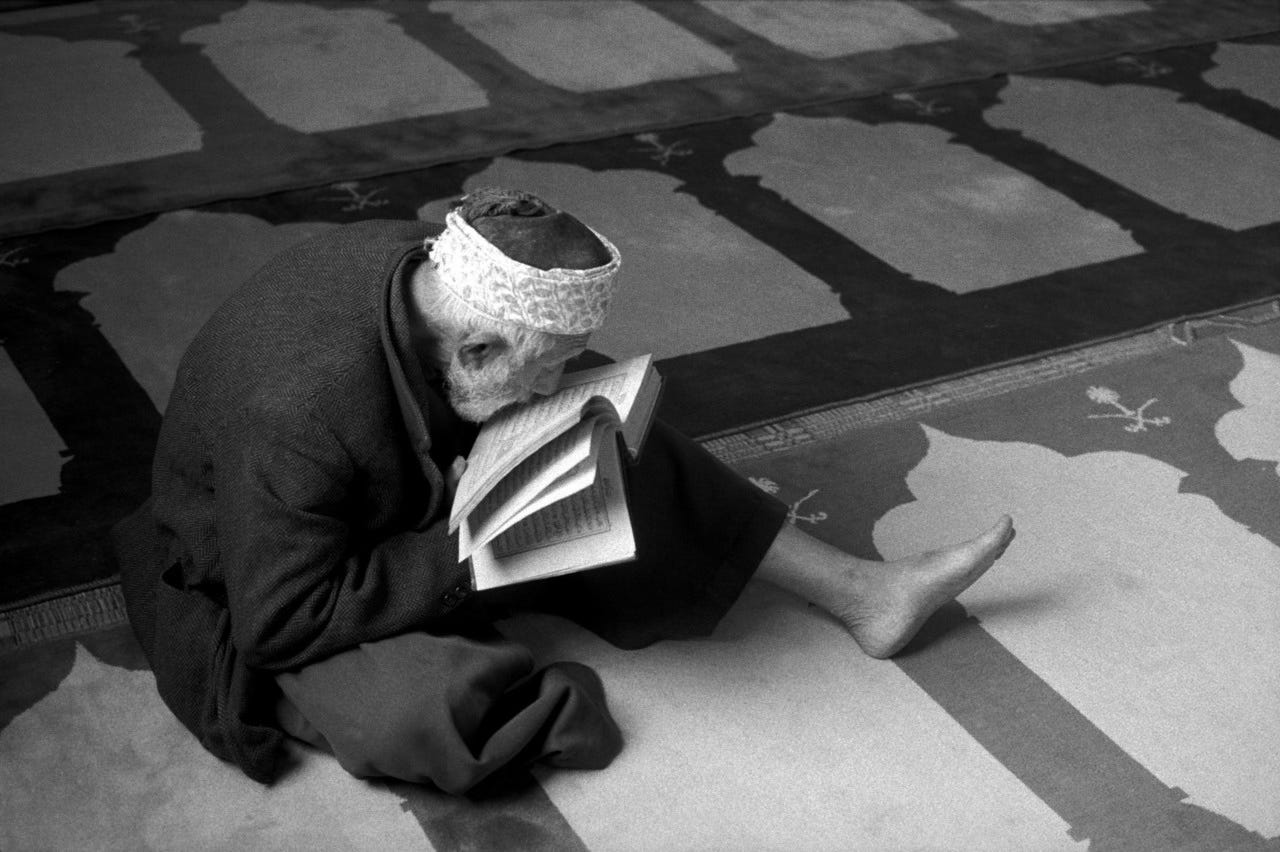
In writing, I wish to serve The Reader.
In editing and translating people’s work, I will support The Author, but I will advocate hard for The Reader.
While reading, I am The Reader. My demand is simple: ‘Keep me reading’. My demand is also seemingly unreasonable: ‘Don’t irritate me’. How must The Author know what will irritate me personally?
One day I will go into what I think it means not to irritate The Reader, but the baseline of how to not irritate The (mysterious) Reader is to know what you want a piece of writing to do.
You can’t just grunt, chirp, wail, trumpet, squeak and snarl without knowing what you want your noises to achieve. And by ‘achieve’ I don’t necessarily mean have an agenda for The Reader’s education. I mean: what The Author wants The Reader to take away.
Today though, I cannot un-jumble my own noises. So I will number them.
1.
I read a very niche book as part of research for the book I’m ghostwriting and there was something in that I wanted to respond to. The author is a doctor and a health administrator and his book is surprisingly readable. (I wasn’t once irritated by it.)
One of its chapter sub-headings is ‘The Decline of Dignity and Civility’.
It has all the makings of a lecture about decency, one that has lost currency because it is most often preached people who support systems that are at base indecent, uncivil and undignified.
I read the chapter out of curiosity and his basic precept for medical practitioners won my heart. Maybe because I’ve had more than one experience of infuriating arrogance from doctors.
He advises The Reader that a lack of civility, dignity and grace can colour ‘professional and personal social interactions’. He gives a few examples of doctors and nurses behaving badly and without respect towards their patients. He says:
The habit of civility contributes to our moral fibre, which in most of us is frayed and needs all the repeated shoring up we can muster.
Joseph V. Simone
This chapter made me think a lot. I wanted to come back to it, read other things, test the words ‘dignity and civility’ a bit more.
But I’ve been too busy.
2.
Part of what I’ve been busy with (privately not professionally), is reading all that I can to try and grasp what is likely to happen on 30 June.
If you are faraway, you may not know that South Africa has a large number of non-South Africans amongst its residents. Some are here legally. Some not. Some are criminals. Most – I’d venture, though I have no statistics to back me up – are not.
Most of them are from other African countries, so most of them are black or brown-skinned. Many South Africans want these non-South Africans to be sent ‘home’. Most of the South Africans wanting to oust the Africans are black. Some of them are aggressive and use violent and indiscriminate means to chase people off, regardless of their legal status in South Africa. Many of them are not violent, but they are angry, and are focusing their rage on non-South Africans.
I’ve noticed on social media that if you express horror or pity for the people fleeing the (actually non-existent 30 June deadline), you're called bourgeois.
If you are white, your privilege is pointed out and your lefty liberal comfort is attacked and mocked.
If you point at government failures – and there are many – you’re dismissed. If you gesture towards law, you’re dismissed. When you bring up Nazi Germany, you’re told to keep Germany out of it. When you bring up the Nakba, someone cries antisemitism. This is what I have gleaned from social media not from first-hand experience.
And there is the froth that comes with the righteous indignation of other-hating that often ends in killing and maiming.
There is division, fracture and loathing. And there is the froth that comes with the righteous indignation of other-hating that, it seems to me, often ends in killing and maiming.
3.
In a poetry collection by Adrienne Rich, I read a quote by George Eliot (a woman writing under the name of a man):
There is no private life which is not determined by a wider public life.
George Eliot
The Author un-jumbles
What do these three things mean? What does The Author want this piece that The Reader is right now reading, to do?
Do I want you to know that I’m so busy I haven’t had time to write a coherent Love Letter?
Do I want you to know that a part of me is glad to be so busy that I feel a little bit justified about peeking at the real world beyond what certain people would no doubt call my ivory tower through my fingers the way I watch horror movies?
Do I want to tell you that I am so frantically engaged with private matters to the almost-exclusion of public matters and some part of me feels ashamed while another part of me feels relieved?
Do I want to tell The Reader, or myself, that there is no private life not determined by the public one?
Do I want you, The Reader, to think about dignity and civility because I am? And how that connects or doesn’t connect to, or flow from or flow towards, violence?
I don’t know.
Maybe I want you, The Reader, to know is that 30 June is my birthday.
I’ve never dreaded that date before.
This year, I do.
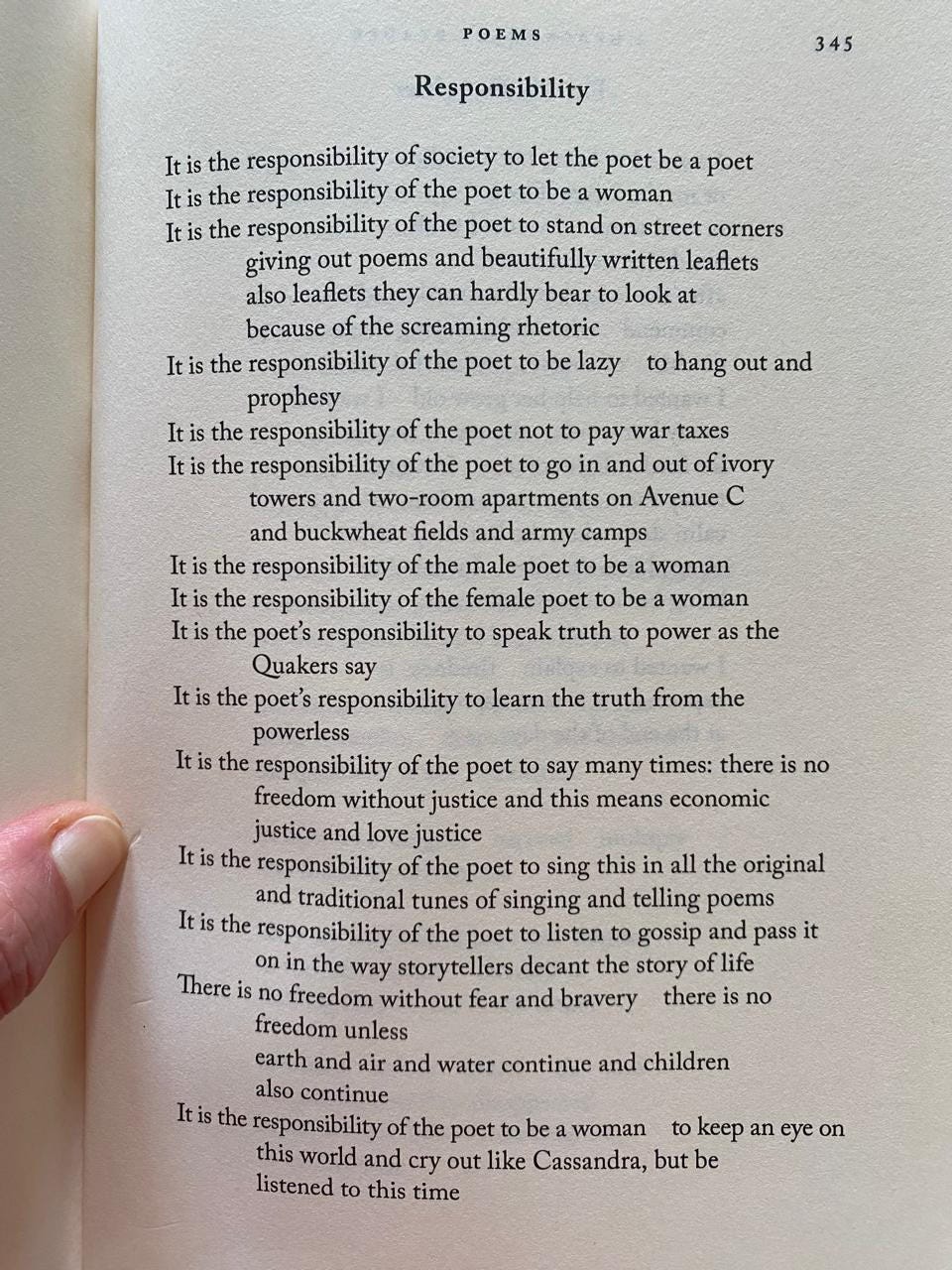
Here’s a poem by Gracey Paley.
Love,
K.
Reading list
I found the photograph I used to illustrate this Love Letter in an article entitle ‘Reading: The Gratification of Watching Others Absorbed’. There are many beautiful photographs of people reading. Go have a look.
That article reminded me of ‘Pure Inwardness: Reading States’.
The niche book I read in which I found the chapter on civility and dignity is called Simone’s Maxims: Understanding Today’s Academic Medical Centers, Joseph V. Simone, MD.
What I think I am writing about here is what I wrote about in ‘These people: I hate hate’.
The poem is from: A Grace Paley Reader: Stories, Essays, and Poetry, Edited by Kevin Bowen and Nora Haley, with an introduction by George Saunders.
Happy earthbirthday wishes for Tuesday. May there be no cause for you to look at it through your fingers.
Poets or not, it seems also our individual and collective responsibilities to make every possible effort to unravel the weave of the colonial and capitalist fabric that is smothering us.
Unjumbling is such an apt word to apply to myself. Sharing the same birthday as you, I also feel the unease and disease of the times more profoundly this year. Keeping the celebration small as it doesn't seem right to do it otherwise. Happy birthday for tomorrow and many returns of your day.